Mankind
Upgrading Workforce with AI
Mankind's full-workforce AI upskilling journey, from shared foundations to department-specific modules, with 30% better research output

Mankind's challenge was not whether AI mattered, it was how to upskill an entire workforce without creating new silos of expertise.
Mankind operates across functions where research quality, regulatory discipline, and speed of decision making all matter. Before this program, AI familiarity was uneven, some teams experimented privately while others avoided tools they did not understand. Without a structured learning and development approach, the organization could not harness AI consistently or measure its impact on productivity.
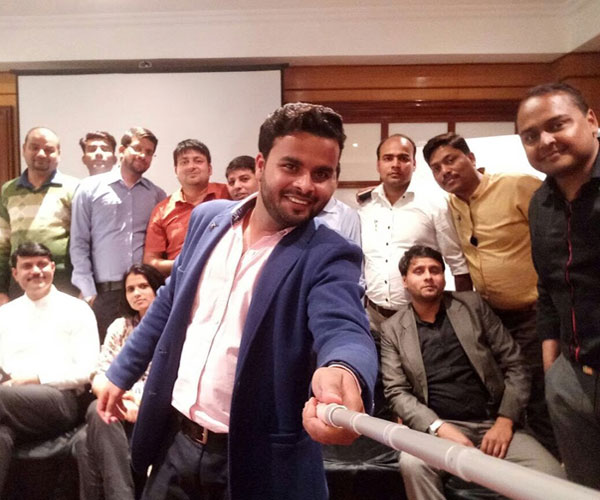
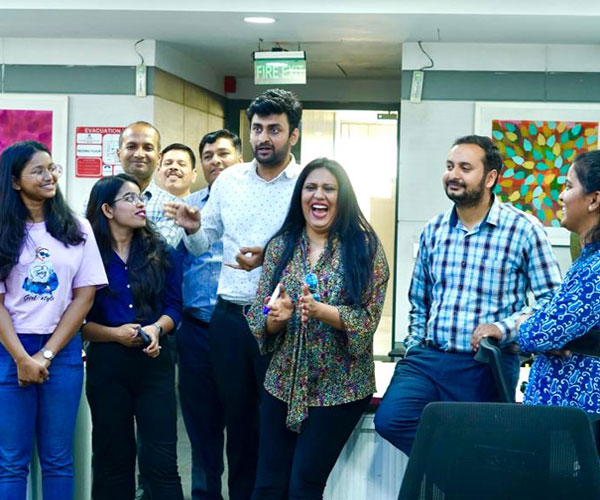
GoTezU partnered with Mankind to deliver a full-workforce, practical AI training program designed as a generic-to-specific journey. Every employee attended foundation sessions covering core AI practices for research, productivity, and better outcomes. Then each department entered tailored, hands-on modules using tools mapped to their daily responsibilities.
The results were tracked in operational terms: 25% improvement in task efficiency as teams integrated AI into workflows, and 30% boost in research depth and output quality. Confidence grew because employees applied AI to real challenges during training, not sandbox examples disconnected from their roles.
Departments moved at different speeds, workflows stayed manual, and research quality varied because AI literacy was uneven.
Mankind lacked a structured approach to leverage AI across departments, which limited productivity and research effectiveness organization-wide. L&D had no single curriculum path that worked for both lab-adjacent research teams and corporate functions.
Without practical AI skills, teams relied on outdated workflows that slowed decision making and impacted outcomes. Manual research synthesis, repetitive reporting, and fragmented data review consumed hours that AI-assisted workflows could compress, if people knew how to use tools responsibly.
Employees across functions remained unfamiliar with AI capabilities and limits. The absence of hands-on guidance left departments unable to harness AI's potential, creating inconsistency in output quality and missed opportunities for cross-team learning.
Leadership needed a corporate AI upskilling model that scaled beyond early adopters, one that respected pharmaceutical-sector rigor while still moving fast enough to stay competitive in how work gets done.
GoTezU structured a generic-to-specific learning path: one foundation for everyone, then function-tailored modules with hands-on tools.
Generic-to-specific learning journey, GoTezU architected Mankind's AI training as a staged L&D path rather than a single event. The generic-to-specific design ensured everyone shared vocabulary and guardrails before teams diverged into specialized applications, preventing the knowledge silos that plague many enterprise AI rollouts.
Organization-wide foundation sessions, All employees learned core AI practices: how to leverage AI for deeper research, improve personal and team productivity, and evaluate outputs critically. Foundation sessions established a common baseline so managers could discuss AI-assisted work in performance conversations without confusion about what was allowed or effective.
Department-specific modules, Each function received tailored, hands-on training with tools and scenarios mapped to their work, research synthesis, market analysis, internal communications, operations reporting, and more. Immediate practical application was the design principle: every module ended with tasks participants could execute in their own systems the same week.
Research-quality focus, Because Mankind's success depends on depth and accuracy of research output, GoTezU emphasized AI workflows that improve rigor, source verification, structured prompting, iterative refinement, not just speed. That focus aligns with the 30% research quality improvement the organization tracked after training.
Task efficiency rose 25%, research depth and output quality improved 30%, and confidence spread as people applied AI to real work challenges.
Task efficiency improvement as AI integrated into daily workflows across departments
Research depth and output quality boost, a critical metric for Mankind's functions
Employee confidence applying AI hands-on to real work challenges, not demo environments
Mankind's workforce is AI-ready, with shared standards and department-level depth, not isolated experiments.
Mankind's workforce emerged AI-ready and equipped for measurable impact, integrating AI into daily workflows with documented gains in efficiency and research quality. Cross-department consistency replaced the uneven experimentation that had slowed decision making before.
For L&D leaders in pharmaceutical and enterprise environments, Mankind's case study demonstrates that full-workforce AI upskilling works when foundation learning is mandatory, specialization is function-specific, and success metrics tie to research and productivity, not vanity adoption stats.
Pharmaceutical and enterprise L&D teams can learn from Mankind's rollout: foundation first, specialization second, measurement throughout.
- Enterprise AI adoption in regulated industries needs a shared foundation before department-specific depth, skipping straight to specialized tools creates uneven quality and compliance risk.
- Hands-on, function-relevant AI modules unlock immediate practical application; Mankind's 25% efficiency gain shows why L&D must prioritize workflow integration over tool demos.
- Research-intensive organizations should measure AI training success on output quality, Mankind's 30% improvement is the benchmark worth copying.
- Cross-department AI literacy eliminates the quality gaps caused when only a few teams know how to work with generative tools responsibly.
Ready to start?
Get results like Mankind.
Share your team size, location, and objectives, GoTezU will scope a ai training program matched to your goals.